Summary: Behind the chaos lies industry restructuring; a rational perspective is key.
This wave of turmoil in the graphics card market is essentially a result of the redistribution of industry resources under the AI wave—AI demand is driving up the costs of storage and high-end chips, and NVIDIA is adjusting product priorities to pursue higher profits. However, regardless of market changes, the gaming market remains NVIDIA's core business. The delay of the RTX 50 Super is merely a strategic a
The recent drama in the graphics card world is more exciting than any gaming storyline: rumors of the RTX 50 Super series cancellation are rampant, the flagship RTX 5090 is reportedly facing production cuts and price surges, and with storage price hikes sweeping the market, DIY enthusiasts are completely caught in a "buy or wait" dilemma. Today, we'll break down the key information to help you understand the underlying logic and the optimal choice.
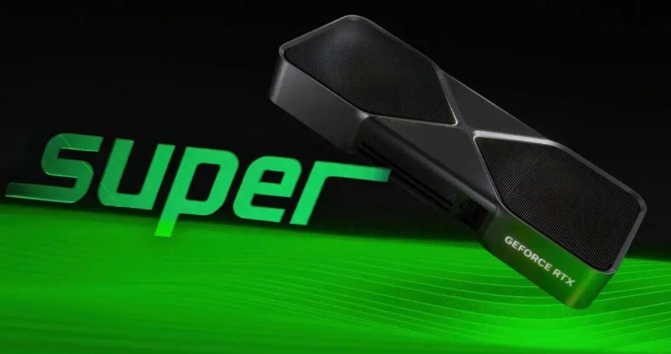
5090 Super Confirmed: Not Cancelled, Just Delayed to Q3 2026
Given Nvidia's style, with both the AI and gaming markets thriving, completely abandoning either front is impossible. This delay of the SUPER series is a passive strategic adjustment due to severe fluctuations in the global supply chain.
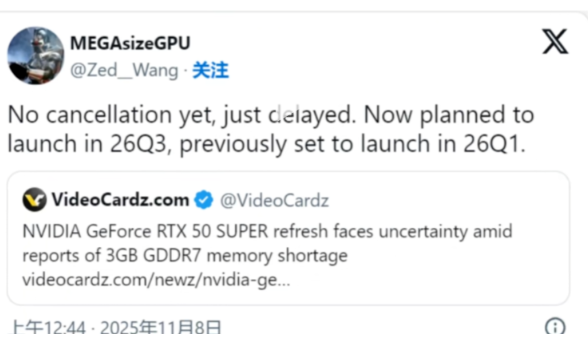
Key Conclusion: The 50 Super series has not been cancelled. The original plan for a CES launch in January 2026 has been postponed to the third quarter of 2026 (July-September).
Key Reasons for Delay: A global shortage of GDDR7 memory, particularly the severely insufficient production capacity of the 3GB memory modules planned for the SUPER series upgrades, coupled with surging demand from AI servers and professional cards, has led to the prioritization of high-end memory capacity. The core upgrades of models like the RTX 5080 Super and 5070 Super rely heavily on this memory, and the production shortage has directly disrupted the release schedule.
The 3GB memory modules will be prioritized for the 5090 mobile version or the RTX PRO 6000 professional cards, leaving relatively little for the desktop consumer market. Furthermore, storage prices are currently skyrocketing; D5 memory prices have almost doubled, and SSD prices have risen by nearly 20% to 30%.
Official Stance: While NVIDIA has not officially announced a delay, it has informed partners of adjustments to its plans, clarifying that the gaming market remains a core focus and that it will not easily abandon the Super series as an important product line.
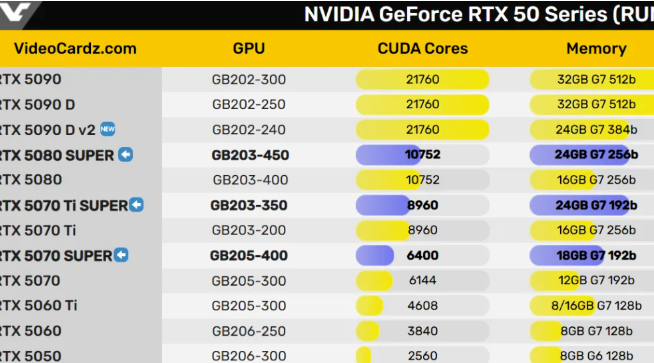
Storage Price Hike: Not just graphics cards, the entire DIY market is under pressure! One of the root causes of the chaotic supply situation in the graphics card industry is the global surge in storage prices, which has impacted all electronic products: The price increases are staggering:
The price of DDR5 16GB memory modules has soared from 390 yuan to around 600 yuan, while DDR4 memory prices have doubled in a month; the average price of 1TB PCIe 4.0 SSDs has increased by over 60% cumulatively, and the average cost of building a complete PC has increased by 10% compared to two months ago.
The core drivers of the price increases:
The explosive growth in AI demand has led to an exponential increase in storage demand. A single AI server has eight times the storage capacity of a regular server; manufacturers like Samsung and Micron are shifting production capacity to high-profit, high-end products such as HBM and DDR5, leading to a continuous reduction in consumer-grade storage capacity and a widening supply-demand gap.
Future Trend Forecast: The industry is generally bullish. Trendforce predicts that NAND Flash contract prices will rise by an average of 5-10% in Q4 2025, and the upward cycle in the storage industry will continue at least until the first half of 2026. Only a slight stabilization is expected at the end of December or the beginning of January, with no significant decline anticipated.
Ultimate Purchase Advice for Gamers: Different Needs, Different Choices
Faced with a chaotic market, blindly following the crowd or waiting indefinitely are both unwise. Making precise decisions based on your needs is the wise approach:
For those building a PC with immediate needs:
If you urgently need to build a high-end platform and have a sufficient budget, it is recommended to purchase an RTX 5090 (non-Super version) as soon as possible. Although there is currently a premium, the supply may worsen further, and prices may still have room to rise. For those with a limited budget, the RTX 5080/5070 are a good option, offering sufficient performance for most AAA games, and the premium is relatively manageable.
For those who prefer to wait and prioritize value:
You can wait until the end of Q1 2026. Storage prices may see a temporary drop at this time, and with the release of the RTX 50 Super closer, non-Super versions may experience clearance sales and price reductions. If you don't need high memory capacity, entry-level models like the RTX 5050 are also cost-effective choices, as their $249 price point is largely unaffected by price increases.
Summary: Behind the chaos lies industry restructuring; a rational perspective is key.
This wave of turmoil in the graphics card market is essentially a result of the redistribution of industry resources under the AI wave—AI demand is driving up the costs of storage and high-end chips, and NVIDIA is adjusting product priorities to pursue higher profits. However, regardless of market changes, the gaming market remains NVIDIA's core business. The delay of the RTX 50 Super is merely a strategic adjustment, not an abandonment.
For gamers, there's no need for excessive anxiety: those with immediate needs should purchase according to their budget; those without immediate needs can patiently wait for storage prices to stabilize or for the RTX 50 Super to be released. Ultimately, a graphics card is a tool; the best one is the one that suits your needs. Blindly chasing high prices or waiting excessively may cause you to miss the optimal experience.
What are your thoughts on the delay of the RTX 50 Super? Would you buy an RTX 5090 given the current market conditions? Feel free to leave a comment and share your opinion!

